

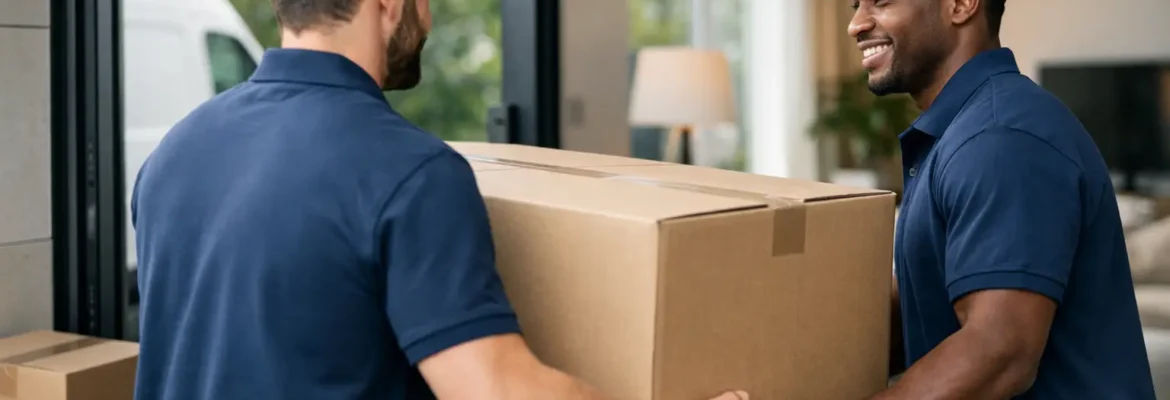
A missed delivery window, damaged equipment or an unsafe lift can quickly become a costly operational problem. A two man delivery service gives businesses the extra handling capacity needed when one driver and a standard courier vehicle are not enough. It is designed for consignments that are heavy, bulky, delicate, high-value or difficult to move safely from collection point to final placement.
For retailers, manufacturers, facilities teams and commercial operations, this is not simply about putting a second person in the vehicle. It is a managed delivery solution that helps protect your goods, your premises, your staff and the experience of the person receiving the consignment.
What a two man delivery service includes
A two-person crew collects, transports and delivers a consignment with the labour and coordination required for safe handling. Depending on the booking, the service may include collection from a warehouse, stockroom, office or supplier; careful loading and securing in the vehicle; delivery to a specified room or floor; unpacking or placement; and removal of agreed packaging.
The exact scope should always be confirmed before collection. Kerbside delivery, threshold delivery and room-of-choice delivery are very different services, particularly where access is restricted or the item needs to travel through a busy building.
Two-person delivery is commonly used for office furniture, display units, commercial appliances, boxed technology, fitness equipment, large screens, specialist stock, medical equipment and premium retail items. It can also be the sensible choice for less obvious consignments, such as several awkward cartons that must be delivered together and handled without disrupting a customer site.
When one-driver delivery creates unnecessary risk
A standard courier service remains the right solution for many urgent parcels, documents and manageable cartons. It is often quicker to arrange and more cost-effective for straightforward point-to-point transport. The calculation changes when the consignment cannot be handled safely by one person, or when delivery requires more than a handover at the door.
Weight is an obvious factor, but it should not be the only one. An item may be within a single person’s lifting capacity yet still be too wide to manoeuvre safely, too fragile to tilt, or too valuable to risk in a rushed handover. A large framed mirror, for example, may weigh less than a commercial printer but requires controlled handling and clear communication between both crew members.
Access is equally important. Narrow corridors, stairs, lift restrictions, loading-bay booking slots, long internal carries and city-centre parking can all turn a simple job into a complex one. In London especially, the final few metres are often more demanding than the journey itself.
A two-man crew reduces the pressure to improvise. It provides the people needed to control the load, navigate the route through the building and complete the handover professionally. That is better for health and safety, and it reduces the likelihood of damaged goods, damaged property or an unsuccessful delivery.
The operational value goes beyond lifting
Businesses often choose a two man delivery service because they need certainty, not just muscle. When a consignment is due at a client site, store opening, exhibition venue or office relocation, the receiving team needs to know what will arrive, when it will arrive and how it will be handled.
A well-planned service supports that certainty. The vehicle is selected for the load, the crew receives clear collection and delivery instructions, and timing can be built around site requirements. Real-time tracking and direct communication give operations teams visibility while the job is in progress, rather than leaving them to chase updates after a problem has occurred.
This is particularly useful for deliveries where the consignee has limited staff available. Instead of asking a receptionist, shop assistant or engineer to help unload a large item, the delivery crew can complete the agreed handling task themselves. Your customer is not put in an awkward position, and your staff are not exposed to manual handling they were not expecting.
For regular commercial requirements, a consistent two-person delivery arrangement can also make planning easier. Collection procedures, site contacts, access notes and proof-of-delivery requirements can be established in advance. That reduces repeated briefing and helps maintain the same standard from one delivery to the next.
Planning the job before collection
The best outcomes depend on accurate information. A two-person crew can solve many handling challenges, but no delivery team should arrive to discover an unmentioned staircase, a restricted loading bay or an item that cannot fit through the intended entrance.
When requesting a quote, provide the dimensions, approximate weight and number of items. Explain whether the goods are boxed, palletised, loose, fragile or unusually shaped. It is also useful to state if the crew needs to bring the item inside, take it upstairs, position it in a particular location or remove packaging afterwards.
Access details matter just as much. Confirm collection and delivery postcodes, parking arrangements, lift availability, floor number, stair access, doorway widths and any timed booking requirement. If there are security checks, site inductions or delivery restrictions, include these at the outset.
For valuable or sensitive goods, specify the handling expectations. You may require a signed handover, photographic proof of condition, protective wrapping, a particular delivery sequence or named-contact confirmation. Clear instructions allow the courier to assign the right vehicle, equipment and crew from the start.
Questions worth resolving early
Before booking, establish who is responsible for each stage of the delivery. Is the item being collected from a ground-floor warehouse, or does it need to be brought down from an office? Will the receiver be available to accept it? Is packaging removal required, and can it be left on site?
It is also worth checking whether there are any site-specific restrictions on vehicle size, delivery times or use of lifts. These details can affect both pricing and the delivery plan. Raising them early is far more efficient than trying to resolve them while the crew is waiting outside.
Two-man delivery and white glove service
These services can overlap, but they are not identical. Two-man delivery refers primarily to the crew and handling capability required for the job. White glove delivery usually adds a higher level of presentation, care and final-placement service.
A two-person crew may be sufficient for delivering a boxed office cabinet into a reception area. White glove service may be more appropriate when the cabinet must be unpacked, positioned precisely, checked for visible condition and have all packaging removed. The right option depends on the value of the item, the expectations of the recipient and the standard your brand needs to maintain.
For premium retail, interior fit-outs, technology installations and executive office deliveries, the final handover can influence how your business is perceived. In these situations, the additional care is often a worthwhile investment. For a straightforward internal stock transfer, a professional two-person delivery may be all that is needed.
Choosing the right delivery partner
The lowest quote is not always the lowest-cost decision. A service that does not account for access, labour, vehicle suitability or delivery timing can create delays and additional charges later. More seriously, it can place your consignment at risk.
Look for a courier that asks practical questions before confirming the job. They should be able to explain what is included, what vehicle will be used, how updates will be provided and what proof of delivery you will receive. For urgent requirements, availability and response time matter, but so does the provider’s willingness to plan the full collection-to-delivery process.
For businesses with recurring requirements, an account-based arrangement can bring greater control. A delivery partner can retain site information, preferred procedures and reporting requirements, making scheduled or repeat work easier to manage. Destiny Couriers supports tailored two-person transport for businesses that need responsive handling alongside clear communication and dependable delivery performance.
Make the final handover part of the plan
A delivery is only successful when the right item reaches the right person, in the right condition, at the agreed time. For bulky, valuable or difficult consignments, that requires more than transport from A to B.
Choosing a two-person crew where the job demands it protects the delivery from avoidable pressure at its most critical stage: the handover. Give your courier clear information, set the required service level and let the delivery be handled properly from collection through to final placement.

Leave a Reply