

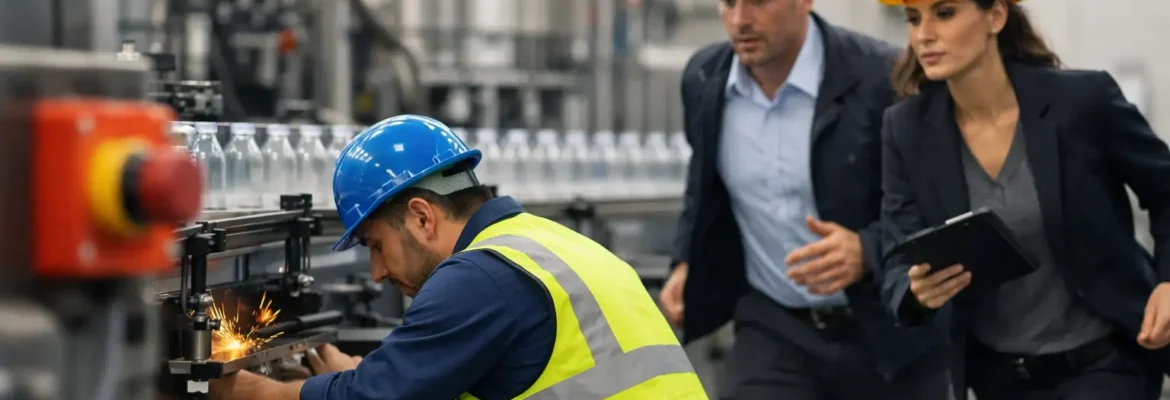
A missing sensor, a failed spindle or a component held at a depot can stop a production line far more quickly than most contingency plans allow for. Manufacturing line rescue is the urgent movement of the parts, tools and equipment needed to prevent that delay from becoming lost output, missed despatches and disappointed customers.
For manufacturers, the issue is rarely simply getting an item from A to B. It is getting the right item collected without delay, handled properly, tracked throughout its journey and delivered directly to the person who can put the line back into operation. When the clock is running, a standard parcel service with broad delivery windows is not always the right answer.
What manufacturing line rescue involves
A manufacturing line rescue service provides rapid, managed transport for time-critical consignments. It may involve a replacement machine part collected from a supplier, urgent tooling moved between sites, packaging materials delivered before a shift begins, or a failed component sent to a specialist for repair.
The best approach depends on the failure, the location of the goods and the practical needs at each end. A small electronic part may need a direct same day courier in a car or van. A heavy motor, palletised stock or larger assembly may require a suitably sized vehicle, safe loading arrangements and a timed delivery plan. If an item is fragile, high value or difficult to manoeuvre, additional handling and a two-person crew may be necessary.
The objective remains the same: reduce downtime by removing avoidable transport delays. That calls for a courier partner that treats the collection as an operational priority, not just another consignment in a network.
The true cost of a stopped line
Line stoppages create pressure across the business. Production targets slip, labour remains on site without productive work, planned maintenance schedules are disrupted and downstream teams are left waiting. If orders are due to leave that day, the impact can quickly reach customer service, transport planning and commercial relationships.
The value of urgent transport should therefore be measured against the cost of lost production, not only against the delivery charge. A dedicated vehicle can look more expensive than an economy service at first glance. However, where it saves several hours of downtime, avoids a missed retailer delivery or prevents an overnight shutdown, it is often the more commercially sensible option.
There is also a reputational cost to consider. Regular customers may tolerate the occasional unforeseen delay, but repeated late despatches undermine confidence. A reliable manufacturing line rescue plan gives operations teams a practical way to respond before a local fault becomes a customer-facing problem.
Common situations that need urgent courier support
Manufacturers use rapid-response transport for a wide range of incidents. The most common include replacement bearings, motors, belts and electrical components; moulds, dies and specialist tooling; essential packaging or labels; quality-control samples; and engineering equipment required by an on-site contractor.
The route can be just as varied. A part may need to travel across London during the working day, from a Midlands supplier to a southern production site, or from an airport collection point after an overseas shipment has cleared. In each case, the transport plan needs to reflect the actual deadline, access restrictions, vehicle requirements and receiving arrangements.
How to organise an effective line rescue
Speed is vital, but clear information prevents the wrong vehicle, a failed collection or a delivery that arrives without the correct paperwork. The strongest response begins with a short, precise briefing.
Confirm what has failed, exactly what is needed and the latest time the item must arrive. Check the part number, quantity, dimensions, weight and whether the goods are boxed, palletised or loose. It is equally useful to establish whether the collection point has loading facilities and whether the delivery site has security checks, booking rules or restricted vehicle access.
For a critical consignment, provide the name and mobile number of a contact at both ends. A courier should be able to confirm collection, give live progress updates and obtain proof of delivery from the correct recipient. This visibility allows the production manager to coordinate engineers, maintenance teams and restart activities with greater confidence.
Where possible, make the item ready before the vehicle arrives. Packaging should protect the goods from movement and weather, while any technical documentation, return notes or safety information should travel with the consignment. A replacement part is of little use if it reaches site without the information needed to fit or approve it.
Choose direct transport when time is critical
For a genuine line-down incident, dedicated same day transport is usually the safest option. The vehicle collects for your job and travels directly to the delivery point, rather than moving through a multi-drop network. This improves control over timing and reduces handling, which matters for delicate parts and urgent engineering equipment.
That does not mean every item needs a dedicated vehicle. If the line has sufficient stock cover and the deadline is the following day, an overnight pallet or scheduled distribution service may be more cost-effective. The decision should be based on the consequences of delay, not the urgency of the request alone.
A good logistics partner will be direct about these trade-offs. Paying for the fastest option makes sense when it protects production. For planned replenishment, a scheduled service can provide dependable coverage at a more predictable cost.
Building resilience before a breakdown happens
The most effective manufacturing line rescue is one that has been planned before an emergency. That does not eliminate breakdowns, but it shortens the decision-making process when they occur.
Start by identifying the parts and materials that could stop production if unavailable. Review supplier locations, lead times, stockholding levels and the routes most likely to be required. Some items may justify holding safety stock on site. Others may be too costly or specialised to store, making a trusted urgent courier arrangement the more practical safeguard.
It is also worth agreeing escalation contacts in advance. Your maintenance lead, production manager, purchasing team and courier provider should know who can authorise urgent transport outside normal hours. A 24/7 response matters when a fault occurs late in the day or during a weekend shift, particularly where the part must be collected from an engineer, supplier or secure facility.
For businesses with regular inter-site movements, a dedicated account arrangement can simplify the process. Agreed vehicle types, collection instructions, site requirements and billing details mean fewer questions at the point of failure. The job can be mobilised faster because the operational context is already understood.
What to expect from a dependable courier partner
A manufacturing operation needs more than a booking confirmation. It needs accountability from collection through to delivery. Look for a provider that can respond promptly, allocate the right vehicle and communicate clearly if traffic, access or collection issues affect the plan.
Real-time tracking is particularly valuable during a line-down situation. It gives the operations team a clear view of progress and reduces time spent chasing updates. Proof of delivery should confirm that the item has reached the right department or engineer, rather than simply arriving at a reception desk.
Flexibility is equally important. A rescue job may involve a direct delivery to a factory gate, a collection from a supplier closing shortly, a return of the failed part or a delivery requiring careful placement at the point of use. Destiny Couriers supports urgent business transport with tailored vehicle options, tracked deliveries and responsive coordination when timing cannot be left to chance.
Keep the response focused on recovery
When production stops, every minute of uncertainty adds pressure. The fastest route to recovery is usually a clear diagnosis, accurate consignment details and direct communication between the supplier, courier and receiving team.
Keep an up-to-date emergency transport contact process alongside your maintenance plan. When the next critical part is needed, the right manufacturing line rescue arrangement can help your team focus on restarting production rather than chasing a delivery.

Leave a Reply