

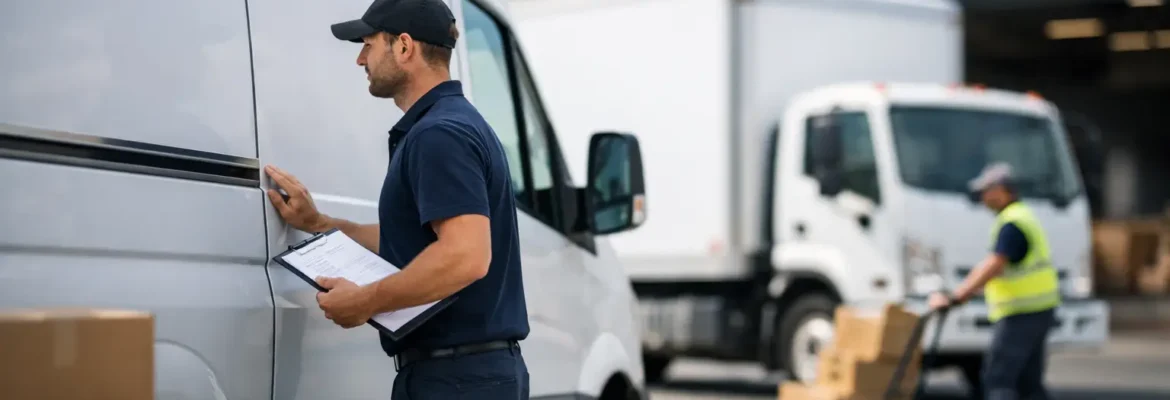
A missed collection window can stop more than one delivery. It can delay an engineer on site, leave a retail launch without stock or hold up production while a critical part sits in a warehouse. When you need to book a dedicated vehicle for delivery, you are not simply arranging transport. You are putting a vehicle, professional driver and direct delivery plan behind a time-sensitive requirement.
For businesses that cannot afford unnecessary handling, depot delays or uncertain arrival times, dedicated transport provides control. The consignment travels specifically for you, on a route agreed around your collection point, delivery deadline and handling needs.
What dedicated vehicle delivery means
A dedicated vehicle is assigned to a single customer job rather than being loaded into a shared, multi-drop network. Once collected, your goods travel directly to the delivery address, with no unrelated collections or scheduled depot sorting in between.
That does not always mean the driver will take the shortest route on a map. Road closures, traffic restrictions, safe loading requirements and delivery-site rules still matter. It does mean the journey is planned around your consignment, not fitted around a wider delivery round.
This approach is especially useful across London, where access restrictions, timed loading bays and congestion can quickly affect a standard delivery schedule. It also works for urgent UK transport, whether goods need to move between offices, suppliers, warehouses, construction sites or customer locations.
When to book a dedicated vehicle for delivery
Dedicated delivery is the right choice when the cost of delay, damage or poor visibility is greater than the saving offered by a shared service. For a routine carton with a flexible delivery date, a standard network may be entirely suitable. For an item that must arrive today, in the right condition and with clear accountability, dedicated transport is often the safer commercial decision.
Your delivery has a fixed deadline
Legal documents, exhibition materials, replacement machinery parts and medical equipment may have little value if they arrive after the required time. A dedicated courier service allows collection and delivery times to be planned around the deadline, rather than a broad delivery estimate.
If the receiving site has a booked slot, tell the courier when requesting a quote. A delivery to a city-centre office is very different from a timed arrival at a distribution centre with vehicle checks and a limited unloading bay.
Your goods need careful handling
High-value equipment, fragile stock, display units, IT hardware and sensitive components can be exposed to unnecessary risk when repeatedly transferred between vehicles or depots. A direct journey reduces handling points and gives the driver a clearer brief on how the load should be secured, protected and delivered.
For larger, awkward or premium items, a two-man or white glove service may be more appropriate than a standard dedicated van. This can include help positioning goods at the delivery point, taking packaging away where agreed, and ensuring the item reaches the correct room or floor. The suitable service depends on access, weight, dimensions and the level of care required.
You need to keep control of the delivery experience
For retailers, manufacturers and service providers, the final delivery reflects directly on the business that sent the goods. A late arrival or driver who cannot access the site can create a poor customer experience, even if the product itself is perfect.
A dedicated service gives you a defined collection, a named transport plan and real-time tracking where available. This visibility helps operations teams update their customer, arrange receiving staff and respond early if conditions on the road change.
The load does not suit a parcel network
Pallets, long items, multiple cartons, bulky equipment and non-standard consignments can be difficult to manage through conventional parcel channels. The right dedicated vehicle can be selected for the actual load, rather than forcing goods into packaging or service limits that do not suit them.
Vehicle choice matters. A small van may be ideal for urgent documents or compact parts in London. A larger van or lorry may be needed for pallets, retail fixtures or multiple delivery pieces. Choosing too small a vehicle risks failed collection; choosing far more capacity than required may add avoidable cost.
What happens after you make the booking
A well-managed dedicated delivery starts with accurate information. The courier will need collection and delivery postcodes, the number and dimensions of items, weight, readiness time, required arrival time and any site restrictions. Details such as stairs, lifts, parking limitations, loading equipment and security procedures should be raised before the vehicle is dispatched.
The vehicle is then allocated according to the consignment and timing. On collection, the driver checks the goods against the brief, loads them safely and begins the direct journey. For urgent work, this usually means collection as soon as a suitable vehicle can reach the address. For planned transport, collection can be arranged for a specific date and time.
During transit, tracking and proactive communication provide reassurance for the sender and recipient. At delivery, the driver obtains proof of delivery in line with the agreed process. For certain jobs, this may include a signature, recipient name, photo confirmation or additional delivery notes.
The service is straightforward, but the planning behind it is not generic. A delivery to a hospital, airport, retail centre or construction site can involve different rules, access arrangements and waiting-time considerations. Giving the full brief at the outset helps prevent delays that no amount of driving can recover.
Preparing goods for dedicated transport
A dedicated vehicle reduces transit risk, but it does not remove the need for proper preparation. Goods should be packaged for road transport and clearly identified, particularly where there are multiple boxes, separate components or delivery instructions.
Before collection, make sure the consignment is ready to move and that someone is authorised to release it. Confirm the recipient knows the expected arrival window and has the means to accept the delivery. If the delivery requires a tail lift, pallet truck, two-person crew or specialist equipment, this must be agreed in advance.
It is also worth checking the value and nature of the goods. Tell the courier if items are fragile, unusually valuable, temperature-sensitive, restricted or potentially hazardous. Some items require a different vehicle, additional documentation or may not be suitable for carriage under a standard service. Clear disclosure protects everyone involved.
Dedicated delivery versus a shared courier service
The main difference is priority. With a shared courier or overnight network, goods are generally consolidated with other consignments. This can be economical for non-urgent deliveries, but collection and delivery timings are shaped by the network’s operating schedule.
With dedicated transport, the vehicle is reserved for your job. That usually delivers faster transit, fewer handling points and stronger visibility, but it can cost more than a shared option. The right decision depends on the consequence of failure, not simply the transport price.
A useful question is: what would a late or damaged delivery cost the business? For a replacement part that keeps a client site operational, a direct same day vehicle may be the most cost-effective option. For stock that can arrive within several days, a scheduled pallet or overnight service may offer better value.
Getting the right quote first time
The fastest way to receive an accurate price is to provide complete information rather than requesting a vehicle based only on a postcode. Include the collection-ready time, deadline, addresses, item count, dimensions, weight and any help required at either end.
Be clear about whether the driver needs to wait, return paperwork, collect goods from multiple locations or deliver to more than one address. These requirements can all be supported, but they affect route planning, vehicle time and cost. A quote should reflect the actual job, not an assumption that creates problems later.
For regular requirements, such as inter-site stock moves, daily documents or scheduled retailer deliveries, an account-based arrangement can bring greater consistency. Destiny Couriers can build transport support around recurring routes, service levels and specialist handling requirements, while retaining the ability to respond when an urgent job appears.
A direct route when the delivery matters
When a consignment is urgent, valuable or operationally critical, certainty has value. A dedicated vehicle gives your goods focused attention from collection to delivery, with a plan built around the result you need. Provide a clear brief, choose the capacity and handling level that fit the load, and arrange the service early enough for the route to be properly managed. That is how a delivery remains a controlled part of your operation, rather than the point where it stalls.

Leave a Reply